How I Finally Found Multifocal Glasses That Actually Work (Without Spe…
페이지 정보
작성자 Sylvia 작성일 26-07-03 13:44 조회 3회 댓글 0건본문
How I Finally Found Multifocal Glasses That Actually Work (Without Spending $500+)
Last month, I found myself squinting at a recipe on my phone while sitting at my kitchen table. My reading glasses were perched on my nose, but the moment I looked up at the oven timer across the room, everything turned blurry. I took off my glasses. The timer was perfectly clear. I looked back down at my phone. Blurry again. By that point, I had three pairs of glasses scattered around the house: one for reading, one for the computer, and one for driving at night. None of them did everything I needed.
That evening, my friend Sarah stopped by for dinner. She watched me swap glasses twice in five minutes and laughed. "You look like a librarian juggling monocles. Why don't you just get progressives?" she asked.
I groaned. I had tried progressives before. Twice. And both times were a complete disaster.
The Challenge: My Progressive Lens Nightmare
Two years ago, I spent over $550 on progressive lenses from a well-known chain store. The experience was awful. Here's what went wrong:
- The reading zone at the bottom was so narrow that I had to tilt my head at weird angles just to read anything.
- The mid-range zone (for the computer) was a tiny sliver. I couldn't see a full screen without moving my head constantly.
- My neck started hurting after just one hour of wearing them.
- The store refused to swap the lenses for a simpler prescription because they "no longer stocked" my frame style.
I felt cheated out of $550. So I went back to juggling multiple cheap readers from the drugstore. It wasn't ideal, but at least my neck didn't ache.
Then last year, I tried an online retailer. Three separate orders—and all three came back blurry. The store offered "110% store credit" instead of a refund. Sounds generous, right? It wasn't. When the replacement pairs also turned out blurry, I was stuck. No refund, just store credit I couldn't use. I ended up at Walmart, paying another $200 to have correct lenses put into the frames I already owned.
After all that, I was done spending big money on optical lenses for sale online or in stores. I figured I'd just live with my three-pair system forever.
The Turning Point: A Simple Discovery
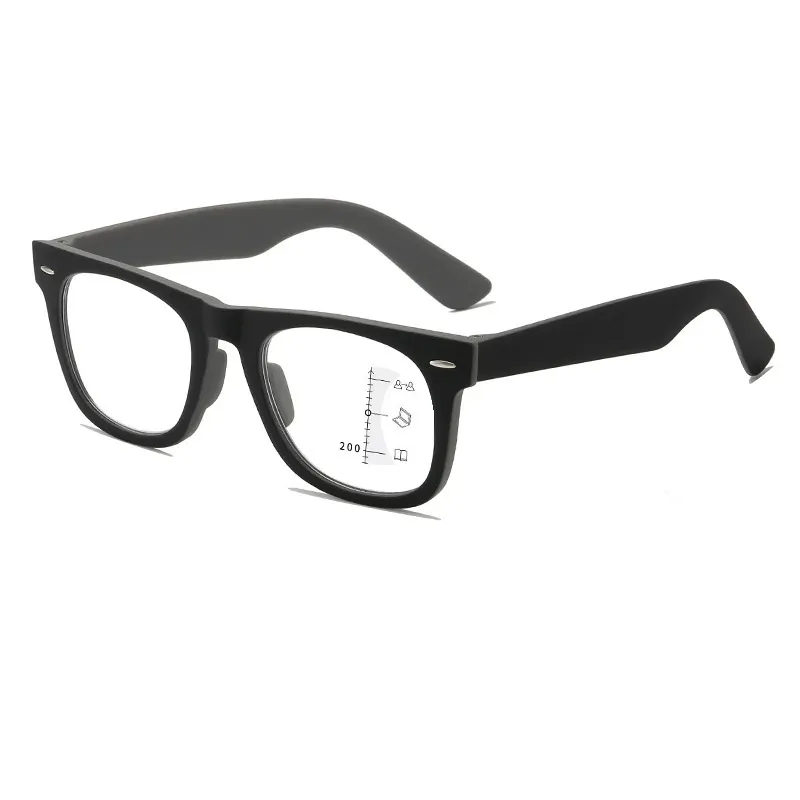
Then Sarah pulled off her own glasses and handed them to me. "Try these," she said. They were square-framed, black and gray. They looked sharp, modern, and unisex.
"These are multifocal," she told me. "I got them from the brand Vision. They were under fifty bucks."
I put them on. I looked down at the recipe on my phone—clear. I looked up at the oven timer—clear. I glanced at the laptop on the counter—also clear. No head tilting. No neck strain. The transition between zones felt smooth, not like jumping between tiny strips of clarity.
"You're kidding me," I said. "These actually work?"
She shrugged. "I've been wearing them for three months. They also block blue light, so my eyes don't get tired at the computer."
That night, I looked up the brand Unisex Multifocal Reading Glasses. Square progressive frame, anti-blue light coating, and a prescription range from 0 to +4.0. I ordered the black-gray pair in my strength.
Life After: The First Week
Day one: The glasses arrived. I put them on at my desk. I could read documents, see my monitor, and glance across the room at the TV without swapping frames. The progressive zones were wider than any expensive pair I'd tried before. Not perfect—there's still a slight adjustment when you shift your gaze up or down. But nothing like the "peephole" effect I got from those $550 lenses.
Day three: I wore them for a full workday—eight hours. No neck pain. No eye strain. The anti-blue light coating made a real difference during long screen sessions. My eyes usually feel dry and tired by 4 PM, but that didn't happen.
One week later: I realized I hadn't touched my other glasses in days. All three pairs sat in a drawer. One pair of the brand multifocals replaced them all.
Three Real Scenarios Where These Glasses Shine
1. Cooking dinner. I read the recipe on my phone (close range), check the timer on the stove (mid range), and glance at the TV in the living room (far range). One pair handles all three—no more pushing glasses up and down my nose.
2. Working at my desk. Spreadsheets, emails, video calls. The mid-range zone on these lenses is wide enough to see a full monitor without bobbing my head. This alone makes them better than the expensive progressives I tried before.
3. Evening reading in bed. The anti-blue light filter means I can read on my tablet without that harsh glare that keeps you awake. I fall asleep faster now. It's a small thing, but it adds up.
The Honest Truth About Price and Quality
These glasses cost a fraction of what I paid at chain stores. That made me nervous at first. Super cheap usually means low quality. Here's my honest take on the tradeoff:
- The lenses: They work well for everyday tasks. The progressive zones are wider than budget pairs I've tried. They won't match a $400 custom-ground lens from an optometrist, but for most people, they're more than enough.
- The frames: Solid. The square design looks good on most face shapes. They don't feel flimsy. After three months of daily use, no loose screws or bent arms.
- The coating: The anti-blue light layer is real. You can see a slight yellow tint when you hold them at an angle—that's how you know it's actually filtering blue light.
Verdict: For the price, these are a smart buy, especially if you've been burned by expensive optical lenses for sale that didn't deliver. You're not risking hundreds of dollars—you're risking lunch money.
Before You Buy: My Action Steps
If you're thinking about trying multifocal readers, here's what I'd suggest:
- Step 1: Know your reading strength. If you already use readers, check the number on them (like +1.5 or +2.0). the brand glasses go from 0 to +4.0.
- Step 2: Check real buyer photos and reviews. Look for people who mention wearing them all day. That tells you more than any product description.
- Step 3: Give yourself a week to adjust. All progressive lenses need a short break-in period. If they still feel wrong after seven days, that's a problem. Mine felt natural by day two.
- Step 4: Compare before you commit. Look at other optical lenses for sale in the same price range. See what coatings and frame materials they offer. the brand stacks up well, but do your own homework.
Coming Full Circle
Last weekend, Sarah came over again. I was in the kitchen, wearing my the brand glasses, reading a recipe, checking the oven, and chatting with her across the counter. She grinned.
"No more librarian juggling act?" she asked.
"One pair," I said, tapping the frame. "That's all I need now."
She nodded. "Told you."
I spent years and hundreds of dollars chasing the right optical lenses for sale—expensive stores, online retailers, multiple prescriptions. None of it worked the way it should have. A $50 pair of multifocal readers from the brand did what $550 progressives couldn't. Sometimes the simple, affordable option is the one that actually fits your life.
Final verdict: Research first. Compare options. Check real reviews. But if you need multifocal readers that work without the premium price tag, these are worth trying. Your neck will thank you.
- 이전글Raumorganisation in kleinen Wohnungen: Praktische Lösungen für jeden Quadratmeter
- 다음글사후피임약 기록이 가족에게 알려질까 걱정된다면
댓글목록
등록된 댓글이 없습니다.